15 September
Web3 and Blockchain
Ethiopia’s Blockchain Wake-Up Call: What If We Regulated Trust?
- helina
- 0 Comments
As Ethiopia enters a new year of digital transformation, one technology deserves a broader conversation: blockchain.
Blockchain is often discussed alongside digital currencies, but its potential goes far beyond financial assets. At its core, blockchain is a way of creating shared, tamper-evident records that can be validated and verified.
That opens a much bigger question for Ethiopia:
How can we create a legal environment that allows responsible blockchain innovation while maintaining the safeguards required for financial and digital security?
Other countries are already exploring this question.
Look at Singapore
Singapore has developed TradeTrust, a government-backed framework that uses distributed-ledger technology and digital standards to make trade documents easier to authenticate and verify.
Instead of businesses repeatedly contacting institutions to confirm whether a document is genuine, digital records can be independently validated.
The potential benefits include reducing paperwork, fraud risks, processing time and administrative costs.
Singapore has also developed OpenCerts, which enables educational credentials to be issued in a format that can be independently verified.
The important point is simple:
The value is not the digital asset. The value is the ability to prove that something is authentic.
Europe is taking a similar approach
The European Union has introduced a Distributed Ledger Technology Pilot Regime, allowing regulated financial-market participants to test DLT-based trading and settlement systems within a controlled legal framework.
Rather than treating every application of the technology identically, the framework focuses on the activity, its risks and the safeguards around it.
That approach offers Ethiopia an interesting model:
Create room for innovation while regulating according to risk.
What could this mean for Ethiopia?
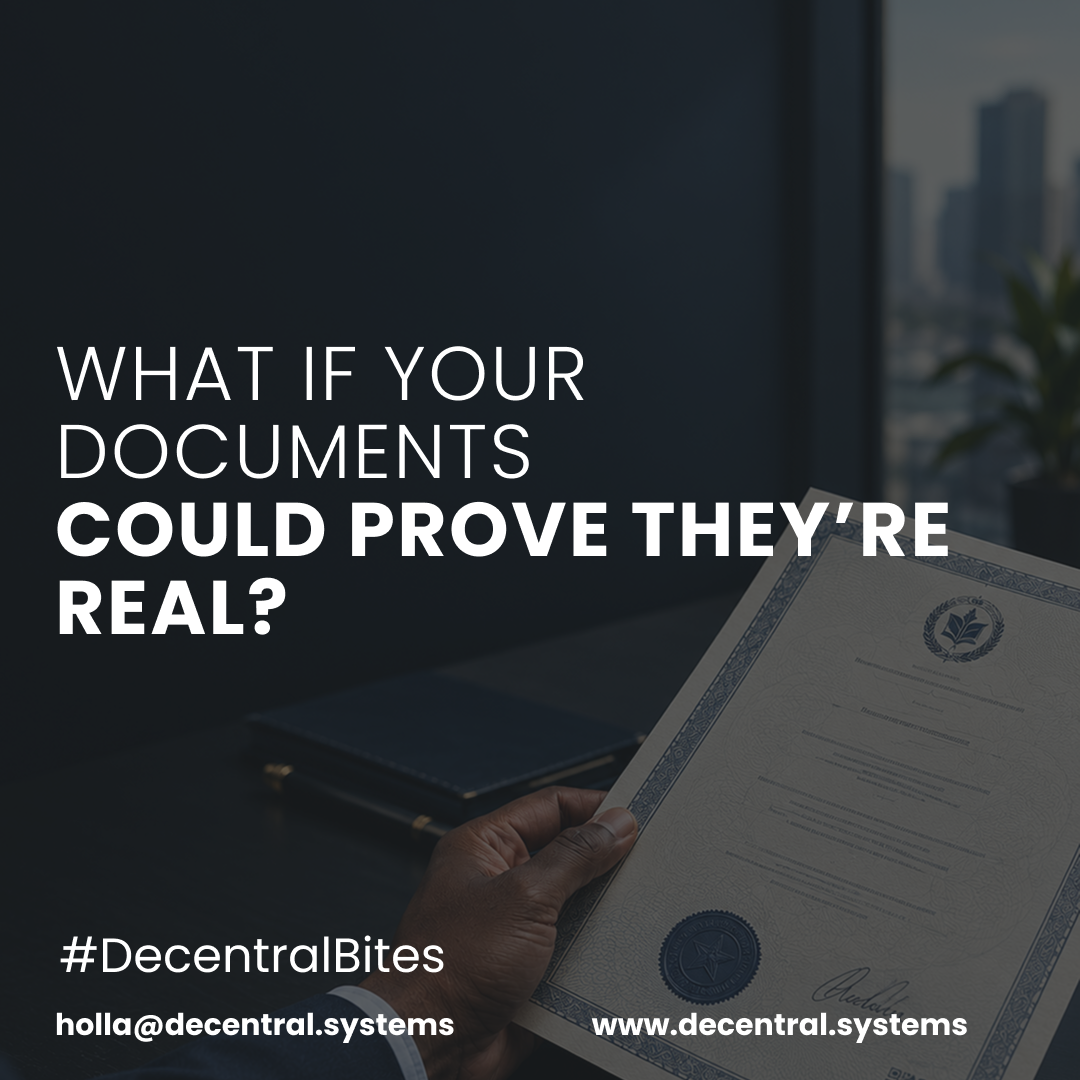
Imagine an Ethiopian university issuing a digitally verifiable certificate.
An employer could validate it without waiting for a manual confirmation.
Imagine an exporter presenting a certificate of origin that an international buyer could independently authenticate.
Imagine government records with a verifiable history.
Imagine supply chains where the origin and movement of goods can be validated.
These applications do not depend on cryptocurrency.
They depend on verification, validation and trusted digital records.
And Ethiopia already has important digital foundations through initiatives such as digital identity, digital payments and broader digital public infrastructure.
The next opportunity could be connecting these systems with clear standards for trust and verification.
What should happen next?
Ethiopia could explore a regulatory framework specifically for blockchain and distributed-ledger applications.
That could include:
Clear definitions separating blockchain technology from different types of digital assets.
Regulatory sandboxes where businesses and institutions can test applications under supervision.
Legal recognition of verifiable digital records where appropriate.
Interoperability standards so new systems can work with existing infrastructure.
And strong privacy, cybersecurity and consumer-protection requirements.
The objective would not be to put blockchain everywhere.
Not every problem needs blockchain.
The objective is to create a safe pathway for technologies that can solve genuine problems.
The bigger opportunity
For Ethiopia, blockchain could eventually support areas such as trade documentation, credential verification, supply-chain traceability, asset records and institutional coordination.
The real question is therefore not:
“What can blockchain replace?”
It is:
“Where does Ethiopia need greater trust, validation and verifiability?”
That is the conversation worth having.
As we enter another year of digital transformation, Ethiopia has an opportunity to build not just a digital economy, but a trusted digital economy.
Because digitizing information is only the first step.
The next step is being able to prove it is real.