Security tokens are digital versions of real financial assets. Instead of paper documents or traditional contracts, ownership is recorded on the blockchain. These tokens are tied to actual value, not just speculation.
They can represent:
Shares in a company
Real estate ownership
Debt or bonds
Revenue-sharing agreements
So instead of just holding a token, you are holding a piece of something real.
Why Smart Money Is Paying Attention
Security tokens bring structure and logic into a space that was once driven by hype. They combine blockchain technology with traditional financial systems.
Here’s why they stand out:
Automation: Dividends and voting can be handled by smart contracts
Accessibility: Assets can be split into smaller pieces, allowing more people to invest
Transparency: Transactions are recorded and easy to track
Liquidity: Easier to trade compared to traditional assets
This is one of the reasons institutions are starting to take them seriously.
From Wild West to Structured Finance
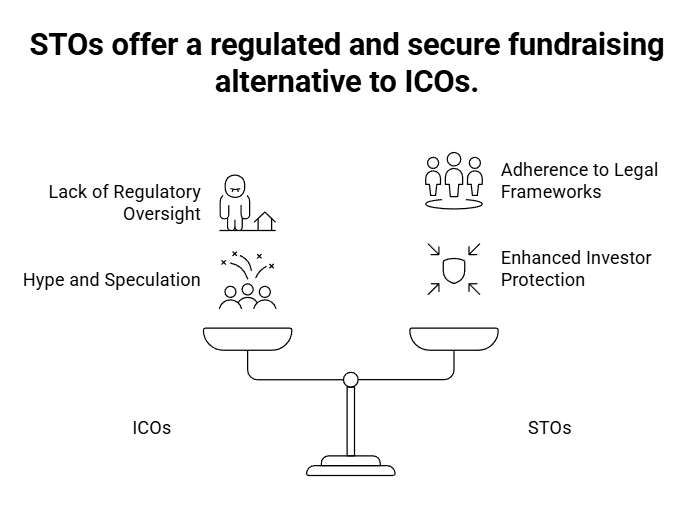
ICOs were fast, unregulated, and often risky. Security Token Offerings, or STOs, are the more mature version.
What makes STOs different:
They follow legal frameworks
They require proper documentation
They focus on investor protection
Instead of guessing which projects are real, STOs create a more reliable and structured way to invest.
The World Is Catching Up
Regulation is no longer a question of if, but how.
In key regions:
United States is working on clearer definitions for digital securities
Europe is leading with frameworks like MiCA that bring consistency
Global markets are moving toward integrating digital assets into traditional finance
This shift is making it easier for companies to build and for investors to trust the system.
Africa’s Quiet Opportunity
Africa may not be leading in regulation yet, but it has strong real-world use cases. The potential is practical, not theoretical.
Some key areas:
Real estate tokenization
Infrastructure funding
Cross-border investment
While regulations are still developing across the continent, innovation is quietly taking place. In some places, conversations around digital assets are more cautious, but interest in improving access to investment and modernizing financial systems is still there. The ideas are moving, even if the policies take time to catch up.
The Subtle Reality at Home
In some environments, digital assets are approached with caution due to strict financial regulations. This slows down adoption, but it does not stop the ideas behind it.
What still matters:
Digital ownership
Better transparency
More efficient systems
Even in stricter systems, these concepts continue to gain attention in quieter ways.
Less Hype, Bigger Impact
Security tokens are not about quick wins or viral trends. They are about improving how finance works at a deeper level.
Looking ahead, they could:
Make ownership more accessible
Increase market efficiency
Bring more trust into digital investing
They may not be the loudest part of crypto, but they could be one of the most important.
Built to Hold, Not Trade
Unlike many popular cryptocurrencies, security tokens are not mainly designed for fast trading or speculation. They behave more like traditional financial assets or commodities that you hold over time.
In many cases:
They are subject to transfer restrictions
They are traded on specialized or limited platforms
They focus more on long-term value than short-term price movement
This means they are closer to owning a share, a bond, or a piece of property than flipping a coin on an exchange. The goal is not just to trade, but to own, earn, and participate in real value over time.