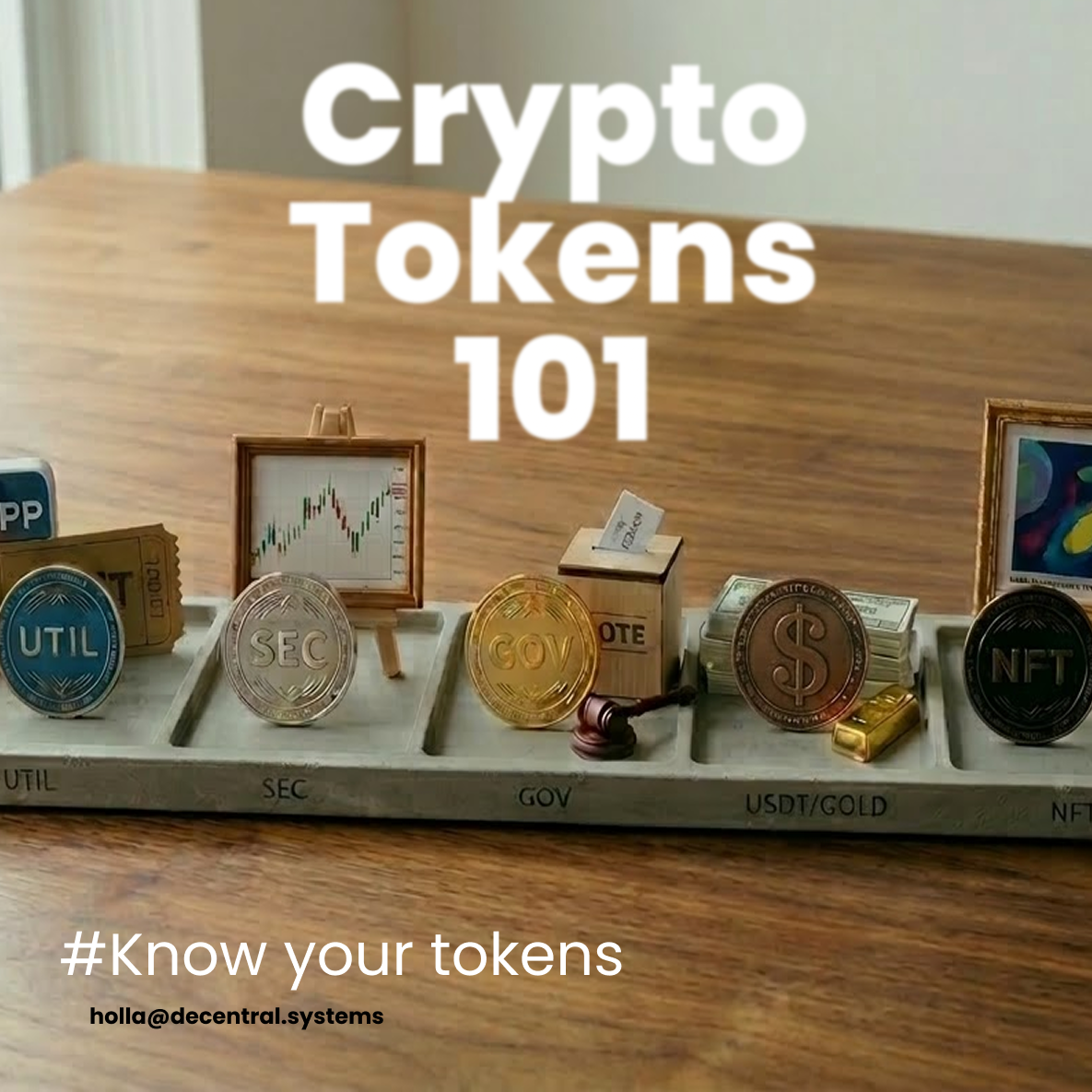
You have probably heard of Bitcoin or Ethereum. Most people think of them as digital money. But the world of crypto is much bigger and way more exciting. Meet crypto tokens. They are digital assets with special powers. They can act like money, but they can also give you access, let you vote, or prove ownership of rare digital art.
So what exactly is a crypto token?
Imagine this. If a cryptocurrency coin is like gold or cash, a crypto token is like everything else you can do with that gold. You can turn it into a concert ticket, a membership card, a stock in a company, or a rare collectible. Tokens are digital, programmable, and flexible. They live on top of blockchains like Ethereum, Solana, or Binance Smart Chain. This means you don’t need to create a new system to make a token. You can use an existing network.
At its core, a crypto token is a digital certificate stored on a blockchain. It can represent:
- Ownership of an asset like a digital deed to art or property
- Access to a service like a membership card for an app or platform
- Voting rights so you can have a say in project decisions
- A store of value like holding money or a digital asset you can trade
Tokens are programmable. This makes them revolutionary. Some tokens can automatically pay you dividends if you hold them. Others can unlock special features inside a game. This works through smart contracts, which are self-executing rules on the blockchain.
Crypto tokens are also the building blocks of Web3, the next generation of the internet. Web3 is about digital ownership, decentralized control, and trust without middlemen. Tokens allow creators, developers, and users to interact directly without relying on banks, platforms, or corporations.
Think of crypto tokens as tiny digital superheroes. Each one has a unique power. Some are meant for spending, some for voting, some for holding as an investment, and some just to collect as rare digital items. Understanding them is the first step to seeing how blockchain is reshaping money, art, business, and online communities.
The Types of Crypto Tokens
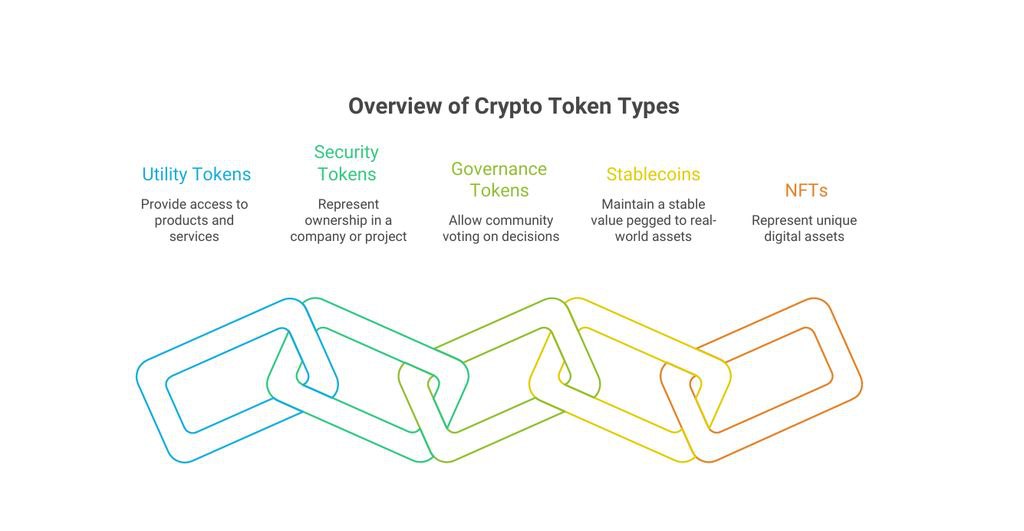
Crypto tokens come in different flavors. Here is a closer look at the main types and what they do:
1. Utility Tokens
Utility tokens give you access to products and services. They are like tickets to use an app or platform. Without them, you cannot use special features. They are all about function.
2. Security Tokens
Security tokens are like digital shares. They represent ownership in a company or project. They can give you profits or revenue. They are regulated and backed by real-world value. Blockchain makes them transparent, secure, and easy to trade.
3. Governance Tokens
Governance tokens give power to the community. Token holders can vote on rules, development, or funding. The more tokens you hold, the more your voice counts. They make users part of the decision-making process.
4. Stablecoins
Crypto prices can be very unpredictable. Stablecoins keep things calm. They are pegged to real-world assets like the US dollar or gold. They are perfect for trading, sending money, or holding funds safely.
5. Non-Fungible Tokens (NFTs)
NFTs are unique. Each one is one-of-a-kind. They can be digital art, music, collectibles, or virtual land. Owning an NFT is like owning a rare baseball card or artwork. They are changing how we think about digital ownership.
Crypto Tokens in Africa and Ethiopia
The crypto revolution is not just in Silicon Valley. Africa is becoming one of the most exciting places for blockchain and crypto tokens. Across the continent, digital assets are helping people access financial services, send money, and start businesses in ways that were impossible before.
Ethiopia is starting to explore blockchain too. From digital payment solutions to tracking agriculture, crypto tokens are opening doors for innovation. For example:
- Financial Inclusion: Many people in Ethiopia and across Africa do not have access to banks. Crypto tokens and stablecoins can provide a safe, fast, and low-cost way to send and receive money.
- Digital Identity: Blockchain tokens are being explored to verify identities for government services, education, and health.
- Education and Skill Development: Tokens can reward people for learning new skills, making education more engaging.
- Entrepreneurship and Investment: Tokens allow small businesses to raise funds or tokenize assets, giving more people the chance to invest in local projects.
Africa’s young, tech-savvy population is perfectly positioned to lead in crypto adoption. Ethiopia is starting to explore how tokens can empower communities, increase transparency, and unlock new opportunities.
Crypto tokens are more than just coins. They are tools for financial freedom, creative expression, and community power. They are the foundation of a new digital world.
Next week we will start diving deep into each type of crypto token. We will explore how utility tokens work, why security tokens matter, how governance tokens give power to users, why stablecoins keep things steady, and what makes NFTs so unique.
Get ready for a fun and exciting journey into the world of crypto tokens.